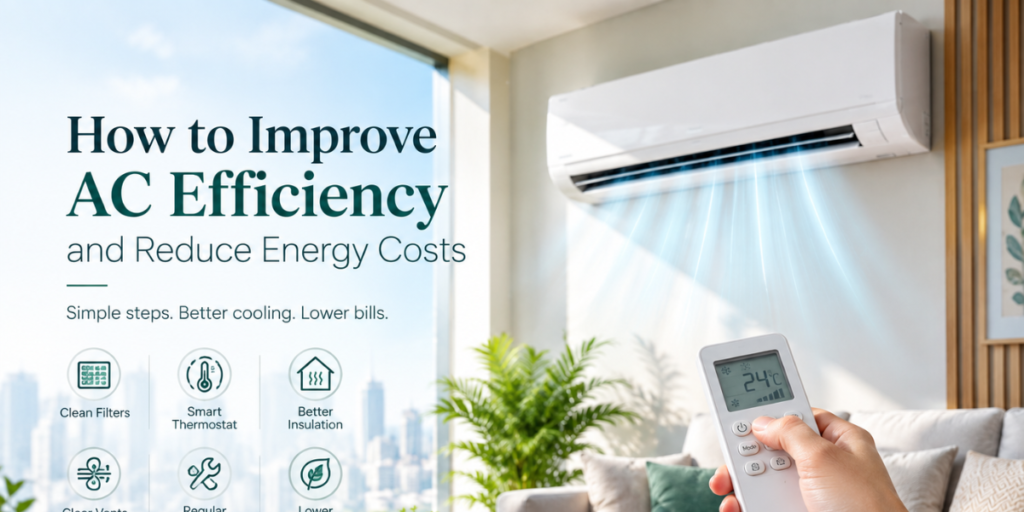
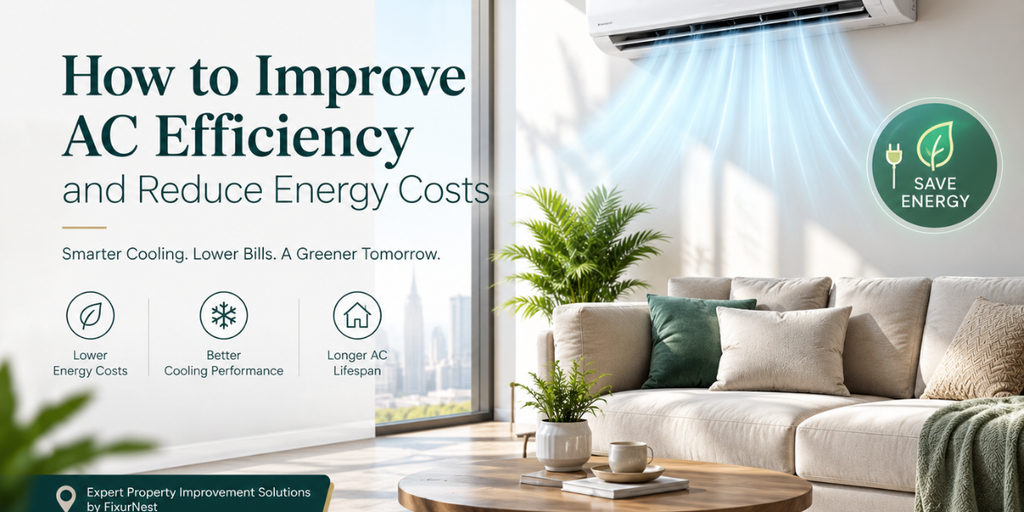
Air conditioning plays an essential role in keeping homes, offices, retail spaces, and commercial properties comfortable, especially during hot weather. However, an inefficient AC system can consume unnecessary energy, increase electricity bills, and struggle to maintain a comfortable indoor temperature.
Learning how to improve AC efficiency can help property owners reduce energy consumption while maintaining better indoor comfort. From regular maintenance and proper insulation to smart temperature settings and improved airflow, several practical steps can make an air conditioning system operate more efficiently.
For property owners looking for professional property improvement and installation solutions, FixurNest provides services designed to support comfortable, functional, and well-maintained spaces.
What Does AC Efficiency Mean?
AC efficiency refers to how effectively an air conditioning system provides cooling while using energy.
An efficient air conditioner can maintain the desired indoor temperature without continuously working harder than necessary. When efficiency decreases, the system may run for longer periods, consume more electricity, and provide less consistent cooling.
Several factors can affect AC efficiency, including:
- Dirty or blocked filters
- Poor insulation
- Air leaks
- Incorrect thermostat settings
- Blocked vents
- Dirty outdoor components
- Aging equipment
- Poor airflow
- Inadequate maintenance
- Excessive heat entering the property
Addressing these factors can improve overall cooling performance.
How to Improve AC Efficiency
There is no single solution for every property. However, combining good maintenance, appropriate temperature settings, and improvements to the surrounding building environment can make a meaningful difference.
1. Clean or Replace AC Filters Regularly
One of the simplest ways to improve AC efficiency is to keep air filters clean.
A dirty filter can restrict airflow, forcing the system to work harder to circulate cooled air. Reduced airflow can also affect indoor comfort and may contribute to unnecessary energy consumption.
Check your AC manufacturer’s recommendations for cleaning or replacing filters. Properties with pets, dust, or heavy occupancy may require more frequent attention.
2. Set the Thermostat Appropriately
Setting the thermostat to an extremely low temperature does not necessarily cool a property faster.
Instead, choose a comfortable temperature and allow the system to maintain it consistently.
Small changes to the thermostat setting can help reduce cooling demand. Programmable or smart thermostats can also automatically adjust temperatures when a property is unoccupied.
For example, you may use different settings during:
- Working hours
- Sleeping hours
- Vacations
- Weekends
- Periods when the property is empty
3. Keep Doors and Windows Properly Sealed
Air leaks around doors and windows can allow cooled air to escape and warm outdoor air to enter.
This creates additional work for the AC system.
Inspect areas around:
- Window frames
- Exterior doors
- Sliding doors
- Service openings
- Wall penetrations
- Other potential gaps
Proper sealing can help maintain a more stable indoor temperature and reduce unnecessary cooling demand.
4. Improve Building Insulation
Insulation helps reduce heat transfer between indoor and outdoor environments.
During hot weather, insufficient insulation can allow external heat to enter the property, making the AC system work harder.
Areas that may require attention include:
- Roofs
- Exterior walls
- Ceilings
- Attics
- Doors
- Windows
Improving the building envelope can complement an efficient AC system by reducing the amount of cooling required.
5. Keep Air Vents and Registers Clear
Blocked vents can interfere with air distribution.
Furniture, curtains, storage items, or other objects should not obstruct important air outlets or returns.
A clear airflow path allows conditioned air to circulate more effectively throughout the space.
If certain rooms consistently feel warmer or cooler than others, the airflow distribution may need professional assessment.
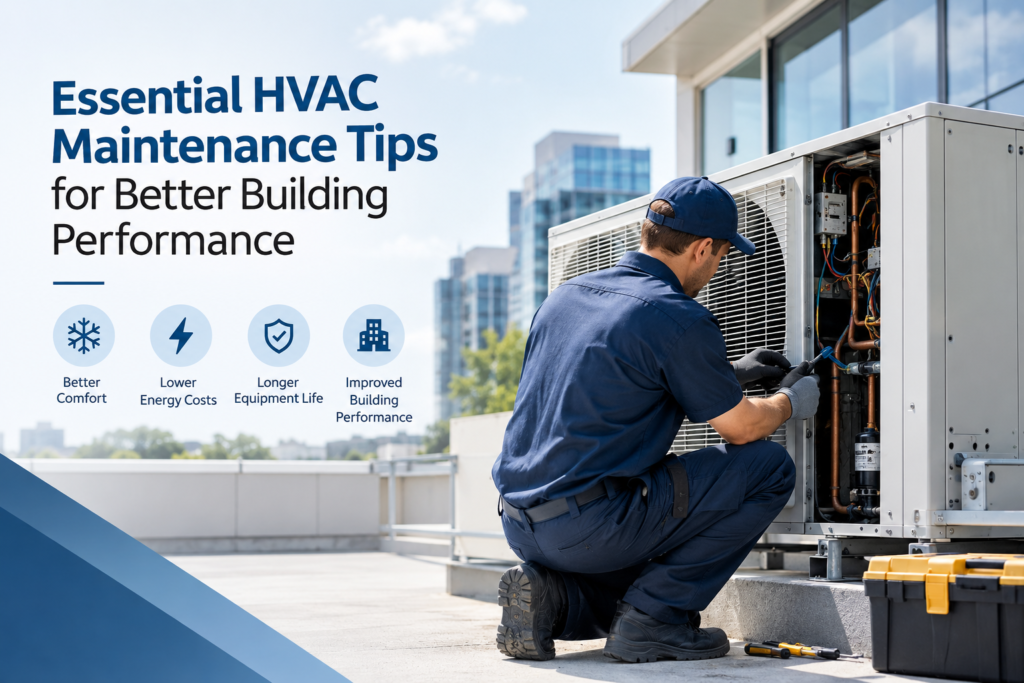
6. Maintain the Outdoor AC Unit
For systems with an outdoor condenser, the surrounding area should remain reasonably clear.
Leaves, dust, debris, vegetation, and other obstructions can interfere with airflow around the unit.
Keep the area around the outdoor unit clear according to the manufacturer’s recommended clearance requirements.
Professional servicing should be used for components that require technical cleaning or inspection.
7. Schedule Regular AC Maintenance
Regular maintenance can help identify problems before they become larger performance issues.
Depending on the system, professional maintenance may involve checking:
- Filters
- Electrical components
- Refrigerant-related issues
- Coils
- Condensate drainage
- Airflow
- Thermostat operation
- Mechanical components
The exact maintenance requirements depend on the AC system and manufacturer.
8. Check for Refrigerant Problems
Refrigerant plays an important role in the cooling process. If an AC system has a refrigerant leak or another refrigerant-related problem, its cooling performance may decline.
Signs of a potential issue can include:
- Reduced cooling
- Longer operating cycles
- Ice formation on components
- Unusual system behavior
Refrigerant work should be handled by a qualified HVAC professional rather than attempting a DIY repair.
9. Reduce Direct Sunlight
Sunlight entering through windows can increase indoor heat gain.
During the hottest parts of the day, curtains, blinds, shades, or other suitable window treatments can reduce direct solar heat.
For properties with significant glass areas, appropriate glazing and shading solutions can also contribute to improved thermal comfort.
10. Use Ceiling Fans Alongside AC
Ceiling fans do not replace air conditioning, but they can improve the perception of comfort by circulating air.
This may allow occupants to use a slightly higher AC temperature while maintaining a comfortable environment.
Fans should be used according to the room’s occupancy and the manufacturer’s recommended settings.
11. Avoid Unnecessary Heat Inside the Property
Indoor activities and appliances can generate heat.
Examples include:
- Ovens
- Cooking equipment
- Certain lighting
- Computers
- Electronic equipment
- Industrial machinery
Where practical, schedule heat-producing activities outside the hottest parts of the day or use appropriate ventilation.
Reducing unnecessary internal heat gain can lower the cooling load.
12. Improve Natural Ventilation When Appropriate
In suitable weather conditions, natural ventilation can help reduce indoor heat buildup.
However, opening windows while the AC is operating can allow conditioned air to escape and warm outdoor air to enter.
Use natural ventilation strategically when outdoor temperature and humidity conditions are appropriate.
13. Consider Energy-Efficient AC Equipment
If an existing AC system is old, inefficient, or frequently requiring repairs, replacing it may be worth considering.
Modern air conditioning systems can offer improved efficiency compared with older equipment, although actual energy savings depend on factors such as system size, efficiency rating, installation quality, usage, climate, and building characteristics.
A qualified HVAC professional can help determine the appropriate system size and specifications for a property.
14. Make Sure the AC Is Properly Sized
Bigger does not always mean better when it comes to air conditioning.
An oversized system may cool a space quickly but can cycle on and off frequently, while an undersized system may struggle to maintain the desired temperature.
Proper sizing should consider factors such as:
- Room or building size
- Insulation
- Windows
- Sun exposure
- Occupancy
- Building orientation
- Local climate
- Heat-producing equipment
Professional assessment is recommended when installing or replacing an AC system.
AC Efficiency and Your Building’s Interior
AC performance is closely connected to the overall building environment.
A property with poorly insulated walls, excessive heat gain, air leakage, or inefficient windows may place additional demands on its cooling system.
This is why improving AC efficiency can involve more than simply servicing the air conditioner.
Building improvements such as better partitions, doors, windows, glazing, and insulation can contribute to a more comfortable indoor environment when properly designed and installed.
How Glass and Aluminium Solutions Can Support Comfort
Modern glass and aluminium systems can play a role in improving how commercial and residential spaces are designed.
For example, appropriately selected glass systems, partitions, doors, and other architectural solutions can help organize spaces while supporting functionality and natural light.
At FixurNest, property improvement solutions can help property owners create practical and modern environments. Visit https://zmglassaluminuml.com/ to explore the company’s solutions.
How FixurNest Can Help Improve Your Property
When considering how to improve AC efficiency, it is useful to look at the property as a complete system rather than focusing only on the air conditioner.
FixurNest provides property improvement and installation solutions for modern spaces. Its services can help property owners address architectural and interior elements that contribute to functionality, comfort, and overall property performance.
From aluminium partitions and glass partition solutions to office interior improvements and commercial glass shopfronts, FixurNest can help create spaces that are practical, modern, and professionally finished.
You can explore FixurNest’s services at https://zmglassaluminuml.com/.
Common Signs That Your AC May Be Losing Efficiency
Knowing the warning signs can help you identify problems early.
Look for:
- Increasing electricity bills
- Longer cooling cycles
- Uneven temperatures
- Weak airflow
- Unusual sounds
- Frequent cycling
- Excessive moisture
- Unusual odors
- Poor cooling performance
- Frequent repairs
If you notice several of these signs, professional HVAC inspection may be appropriate.
AC Efficiency Tips for Offices
Commercial offices often have different cooling requirements from residential properties.
To improve efficiency in an office:
- Use programmable or smart temperature controls where appropriate
- Keep vents unobstructed
- Maintain filters and equipment
- Avoid leaving doors open unnecessarily
- Manage sunlight through blinds or suitable window treatments
- Reduce unnecessary heat from equipment
- Review cooling requirements when office occupancy changes
- Maintain building insulation and sealing
Office layout can also influence how conditioned air moves through a workspace.
AC Efficiency Tips for Retail and Commercial Spaces
Retail stores and commercial spaces often have large entrances, glass areas, lighting, customers, and equipment that contribute to heat gain.
Businesses can consider:
- Keeping doors closed when appropriate
- Maintaining door seals
- Using suitable entrance configurations
- Managing direct sunlight
- Maintaining AC equipment
- Keeping airflow unobstructed
- Considering energy-efficient lighting
- Reviewing insulation and glazing
A well-designed commercial space can support both customer comfort and efficient operation.
Why Professional Installation Matters
Even an energy-efficient AC system may not perform as expected if it is poorly installed.
Professional installation can help ensure that:
- The system is correctly sized
- Components are properly connected
- Airflow is appropriately managed
- Electrical requirements are addressed
- Installation follows manufacturer requirements
- The system operates as intended
Similarly, architectural improvements should be professionally measured and installed to achieve the intended functionality and finish.
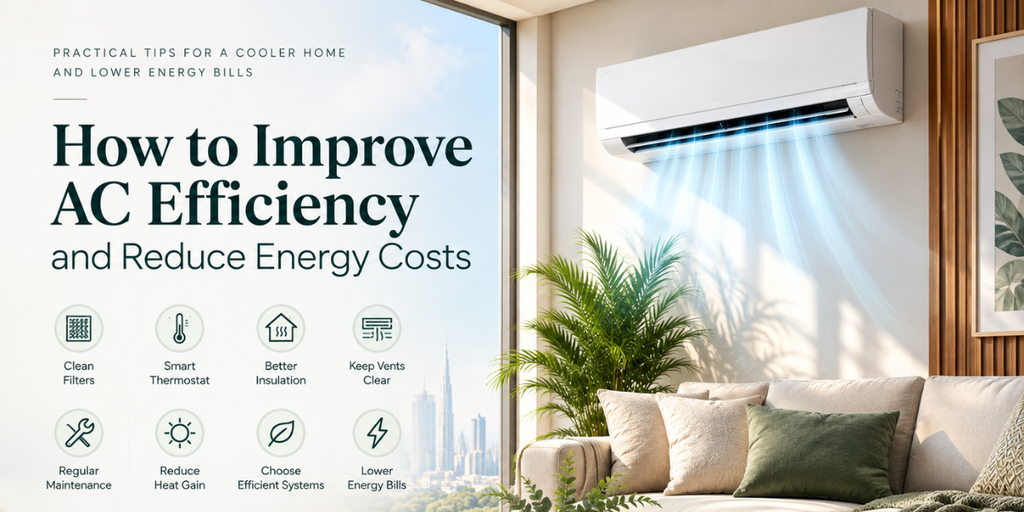
Simple AC Efficiency Checklist
Use this checklist to review your property:
- Clean or replace AC filters regularly
- Keep vents unobstructed
- Maintain appropriate thermostat settings
- Seal air leaks around doors and windows
- Check building insulation
- Keep outdoor AC units clear
- Schedule professional maintenance
- Address unusual AC performance
- Reduce unnecessary indoor heat
- Manage direct sunlight
- Consider energy-efficient equipment
- Ensure AC systems are properly sized
- Review the overall building environment
Final Thoughts
Understanding how to improve AC efficiency involves looking at both the air conditioning system and the building in which it operates.
Regular maintenance, clean filters, appropriate thermostat settings, good insulation, sealed openings, clear airflow, reduced heat gain, and properly sized equipment can all contribute to more efficient cooling.
For property owners, improving the surrounding environment can also be an important part of creating a comfortable and functional space. Professional property improvement solutions can complement HVAC performance by addressing elements such as partitions, doors, glazing, and interior design.
FixurNest provides modern property improvement and installation solutions for residential and commercial spaces. To explore its services and find solutions for your property, visit https://zmglassaluminuml.com/.
Frequently Asked Questions
How can I improve AC efficiency?
You can improve AC efficiency by maintaining filters, keeping vents clear, using appropriate thermostat settings, sealing air leaks, improving insulation, reducing heat gain, and scheduling professional AC maintenance.
Does setting the AC temperature lower save energy?
Generally, setting the thermostat excessively low does not make an AC system cool a property proportionally faster. A reasonable, consistent temperature setting can help manage cooling demand.
Can insulation improve AC efficiency?
Yes. Appropriate insulation can reduce heat transfer between the indoors and outdoors, potentially reducing the cooling load placed on an AC system.
How often should an AC be serviced?
Maintenance requirements vary by system and manufacturer. Regular professional inspections can help identify issues and keep the system operating properly.
Can windows affect AC efficiency?
Yes. Windows can contribute to heat gain, particularly when exposed to direct sunlight. Appropriate glazing, shading, curtains, or blinds can help manage solar heat gain.
Does a ceiling fan make an AC more efficient?
Ceiling fans can improve air circulation and occupant comfort. They do not directly increase the mechanical efficiency of an AC system, but they may allow occupants to use a slightly higher thermostat setting while remaining comfortable.
Why is my AC running constantly?
Continuous operation can have several causes, including high outdoor temperatures, an undersized system, poor insulation, restricted airflow, dirty components, thermostat issues, or mechanical problems. Professional assessment can help identify the cause.